Just Retirement Insights 2026
What retirement really looks like in South Africa today
Every two years, Just Retirement Insights takes a closer look at how South Africans are planning for retirement, and how that’s changing over time.
The 2026 findings tell an important story. On the surface, it’s a positive one: more people are planning, setting goals, and taking their financial futures seriously.
But beneath that progress, there’s a quieter shift happening. Confidence is under pressure. Costs are rising. And many retirees are starting to question whether their savings will last as long as they need them to.
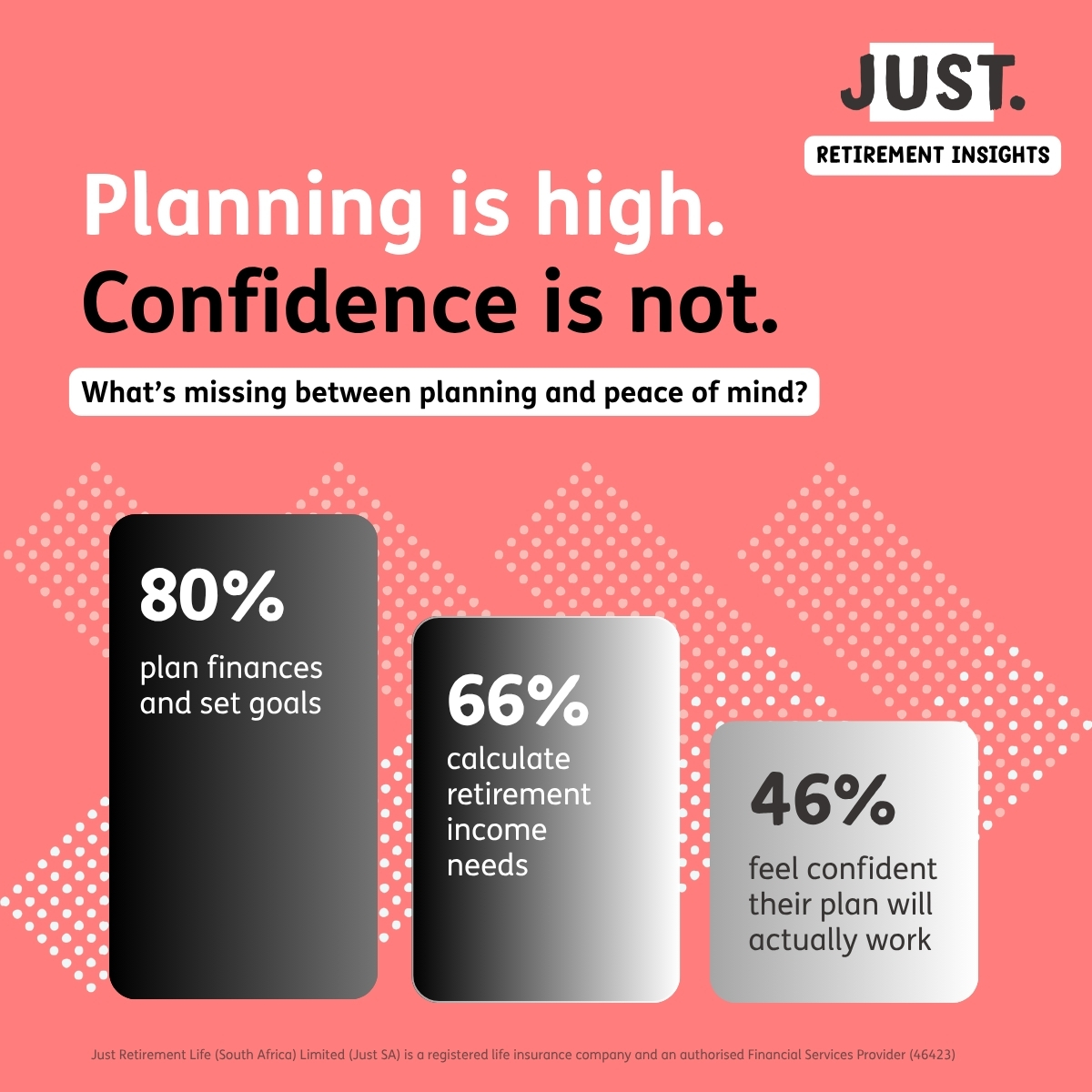
In other words, while retirement planning has improved, peace of mind hasn’t necessarily followed.
This article unpacks what the latest research reveals – from how financial behaviour changes under pressure, to the risks many retirees overlook, and what really matters when it comes to building a sustainable income for life.
Insights to help you plan with greater confidence
Understanding the South African retirement market
The study is based on interviews with South Africans aged 50 to 85 spanning both retirees and those nearing retirement.
What stands out is that retirement is no longer just about lifestyle. It’s increasingly about financial resilience.
Most people are planning more actively than before: setting goals and thinking carefully about their financial futures. In fact, financial planning behaviour has improved significantly over the past few years, becoming far more mainstream than it used to be.
But the environment has changed too. Rising living costs, market uncertainty, and longer lifespans mean retirement savings are being asked to do more than ever before.
Financial behaviour under pressure
When economic conditions shift, so does behaviour – and the research shows that these changes can last longer than we expect.
During times of strain (like the COVID–19 period), people became more cautious, saving more and spending less.
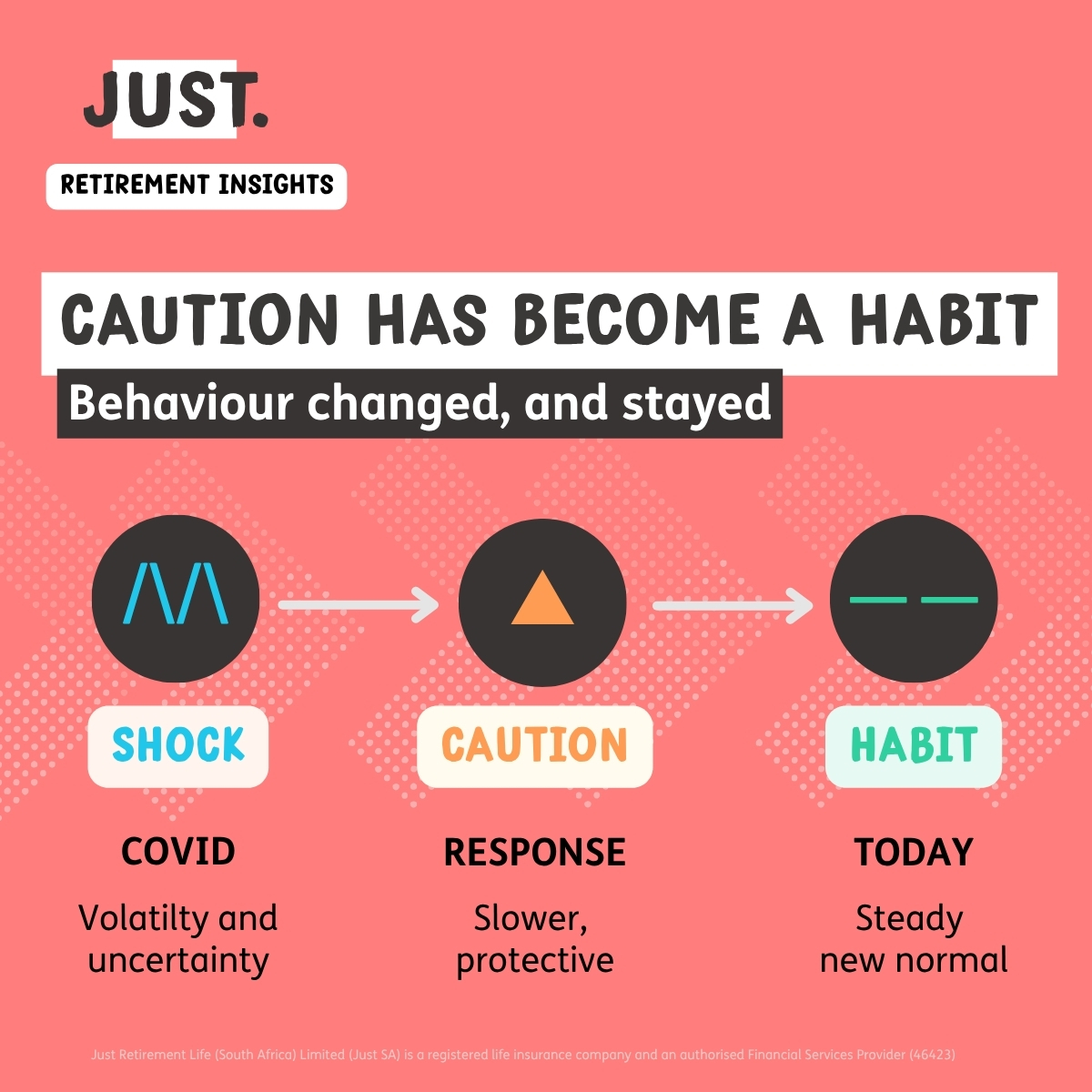
Even as conditions improve, that caution doesn’t fully disappear. Instead, it becomes ‘sticky’:
- People remain more careful with their money.
- Their spending decisions become more deliberate.
- There’s a stronger focus on protecting what they have.
At the same time, appetite for investment risk drops sharply under pressure and only partially recovers later.
In simple terms: when things feel uncertain, people look for certainty. This reflects a deeper emotional need for stability and control.
Retirement readiness and confidence
Here’s where the story becomes more complex. On the one hand, people are doing the right things – planning, setting goals, and thinking ahead. But on the other hand, confidence is slipping.
In 2026, less than half of respondents (43%) felt confident their money would last in retirement, which is a noticeable drop from previous years. A growing number of retirees fall into what the study calls a ‘confidence gap’. They’ve planned and they’ve prepared, but they still feel unsure.
Many retirees are worried about:
- Outliving their savings
- Rising living costs
- Market volatility affecting their income.
This tells us something important: planning alone is no longer enough. People need certainty, not just strategy.
Retirement blind spots and risks
Even with better planning, there are still important risks that many people don’t fully account for.
The longevity challenge
While people are accurately expecting to live to the average age (statistically it is 87 for females, and 82 for males), they are not proactively planning for it. Nor are they planning for the likelihood of increased medical expenses later for frail care or age-related diseases.
If you expect to live to around age 85, retirement is likely to last 20 to 25 years. But this year’s survey respondents have a median savings of around R1.6 million against an estimated need of R3 million.
That leaves a significant shortfall, even before factoring in inflation or rising healthcare costs.
Planning gaps
Some risks are simply underestimated or delayed:
- A large portion of retirees haven’t calculated their full retirement needs.
- Only a small percentage have planned for cognitive decline or long-term care.
Fragile fallback plans
If funds run out, many people expect to rely on family support as the primary fallback, with government or community support increasingly becoming a close second. But these safety nets are under pressure too.
Taken together, these blind spots highlight a simple truth: retirement risk is behavioural as well as financial.
Securing a sustainable retirement income
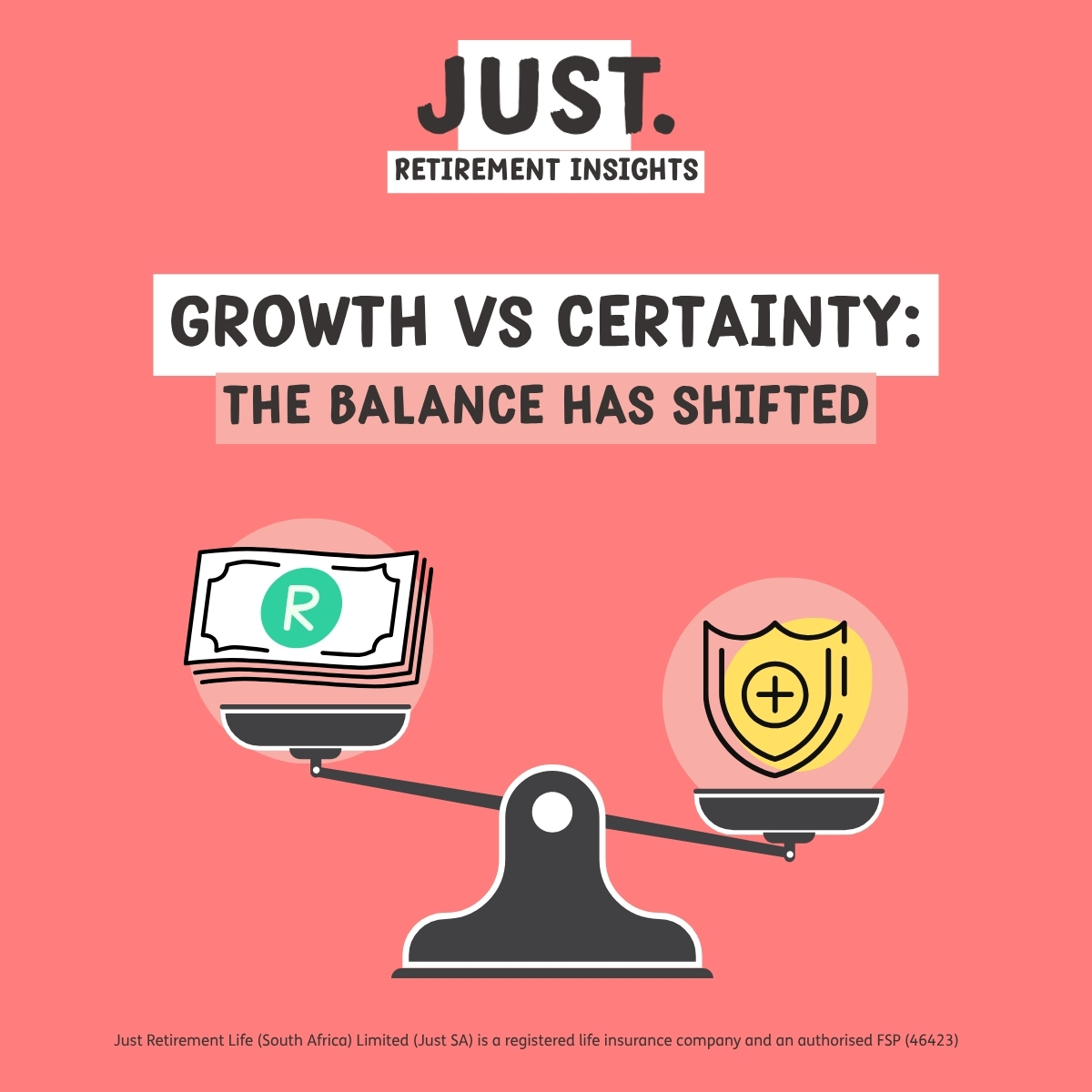
So what matters most when it comes to building a more secure retirement? Across all the research, one theme stands out clearly: certainty is non-negotiable. When asked to choose, retirees consistently prioritise:
- An income that lasts for life
- Protection against market downturns
- Keeping up with inflation
- Covering essential costs like medical care.
In contrast, things like flexibility and leaving a legacy, while still important, are secondary.
Even when behaviour changes and confidence fluctuate, this preference for guaranteed income remains remarkably stable over time.
What this means for you
A sustainable retirement income is about creating reliability and feeling secure enough to live well.
That may mean considering solutions that:
- Provide income you can’t outlive
- Protect against market volatility
- Give you greater peace of mind in uncertain times.
Final thought
The findings from Just Retirement Insights 2026 show that South Africans are becoming more informed and more proactive, but also more aware of the risks ahead.
Perhaps that’s the most important takeaway from our survey results: Retirement planning is no longer just a financial exercise. It’s about having confidence in your plan and real certainty for the years ahead.

About the author
Michelle Dodd
Marketing Manager
Michelle started her career in market research, which provided a good grounding and understanding of various target markets both locally and internationally. Progressing to more of a generalist marketing role, she focused on event management and communications, and this is where her passion for writing and editing evolved.
Michelle has worked in financial services marketing for over 15 years including international family office, Stonehage Fleming and Old Mutual Wealth. She is currently pursuing her passion for plain language and clear, relevant communication as Just SA's marketing, PR and digital manager.
Michelle holds a Business Science degree from the University of Cape Town with honours in Marketing.
Do you need more information?
Consider seeking advice from a qualified financial adviser. Contact us to request the details of an adviser in your area, or to find out more about our offering.